

Laser Etching
There is a lot of misunderstanding about laser etching of stainless steel. This quick guide will help you to correctly specify what you require for your project.
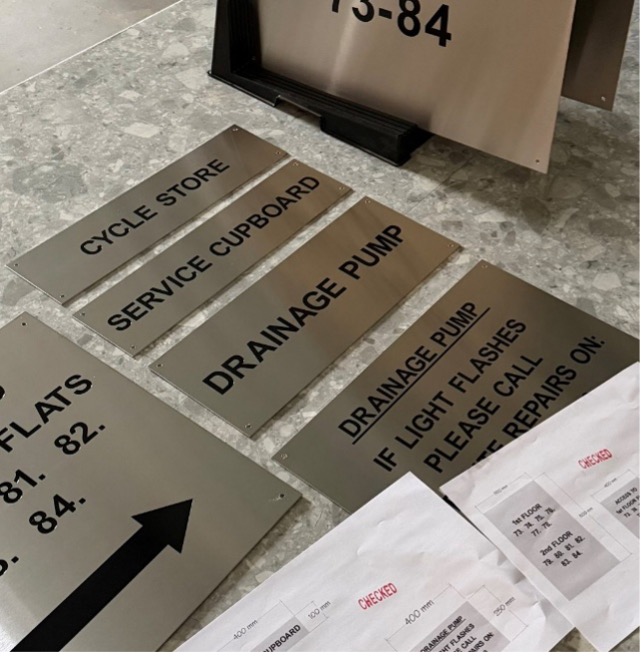
Chemical etching is the process used to produce high-quality signs and nameplates, not laser etching or laser marking. In this process, the design is etched into the surface of stainless steel without distortion or damaging the surface finish. The etched graphics are permanently recessed into the surface, and can be paint-filled in any colour. This is the specification used for projects such as wayfinding signage, with high-quality graphics indented into the metal surface that can be read easily, even at shallow angles where surface prints or laser marking will become invisible due to reflections. It is also referred to as indented or debossed lettering.
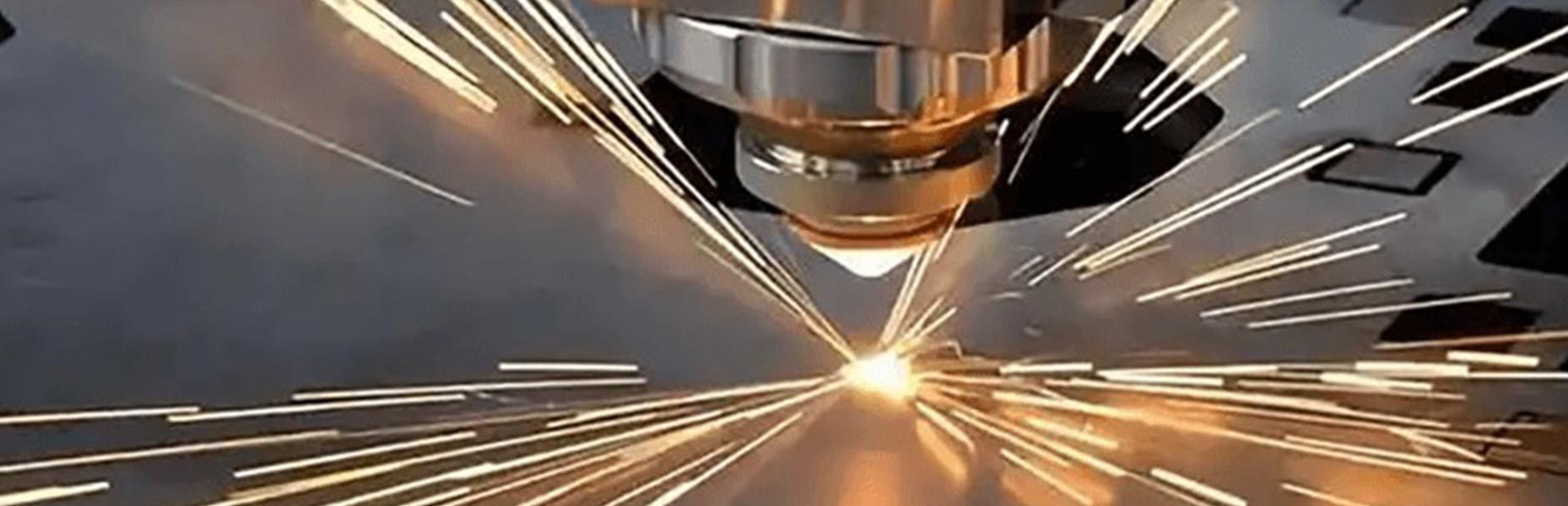
Laser marking, also called laser etching, is a process that darkens the surface of the stainless steel without removing metal. A laser is used to produce localised intense heat, which discolours the stainless steel, but does not engrave or etch into the surface. It is a useful process for marking machine parts and similar engineering applications, but it produces poor quality signage. The contrast is too poor for signage, and because the graphics are merely a mark on the surface, they disappear into reflections unless viewed straight-on. The heat required to change the colour of the stainless steel is so intense that it causes distortion, so the metal surface becomes warped around the graphics. Use this process for product or part marking that will not be subjected to a lot of wear or abrasion.
Laser engraving is a process that uses very high temperatures to burn or vaporise designs into the target material. It works well on materials that burn such as wood or plastics, but this does not mean it cannot also be used on metals such as stainless steel, although the process is very slow to reduce overheating. The amount of heat produced will severely distort sheet metals, so applications for this technique are limited to more robust metal items where the heat distortion will not be visually unacceptable. The heat also scorches the surface, so a considerable amount of metal finishing is required to restore the appearance of the metal, similar to the surface restoration required after welding. It is a useful method to permanently mark stainless steel components that have to be more clearly visible than is possible by laser marking, or which have to survive wear and abrasion.
If high-quality etching of graphics into decorative grades of stainless steel is what you require for your project, you can read more on our Chemical Etching Page where there is also a technical guide which gives detailed information for designers. If what you require is laser marking or laser engraving, send us details of your enquiry, as we work with a number of laser specialists, and we may know the best company to advise you.